

Shared Ownership
We understand that getting on the property ladder in the current market is difficult - whether you're saving for a large deposit or struggling to get a mortgage application accepted. This is where an affordable house scheme such as shared ownership can help.
Shared ownership is a key part of the service we offer at Platform and we have a range of shared ownership properties available in desirable developments across the UK.
Below we answer the question 'what is shared ownership', tell you everything you need to know about how shared ownership works and how shared ownership staircasing fits into the process.
What is Shared Ownership?
Shared Ownership is a relatively simple concept. You buy a share of your home and pay rent on the remaining amount. You can typically buy between 10% and 75% of the property’s full market value.
This offers much more flexibility and accessibility for buyers in two different ways. Firstly, it lowers the amount you need for a deposit - most deposits on a shared ownership scheme are between 5% and 10% of your share, not the full amount.
Secondly, a Shared Ownership scheme means you also reduce your mortgage repayments, while paying below-market rent on the other amount.
If you decide you want to buy more shares at any point, you can. Through a process called ‘staircasing’, you buy more shares of your home and reduce how much rent you pay on the remaining amount.
This ensures that you’re always in control during the buying process and in most cases, directly leads to full home ownership. With Shared Ownership, you get the home that you want, with a repayment plan that’s realistic for you.
- Available
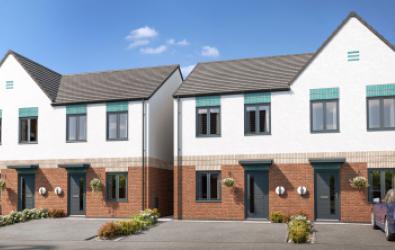
The Dalby
Semi-Detached House
Part of Trentside, Beeston, Beeston, Nottingham Price from £32,500 for 10% share Register your interest - Available
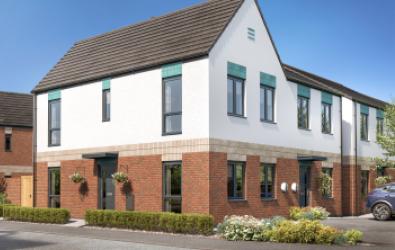
The Weston
Semi-Detached House
Part of Trentside, Beeston, Beeston, Nottingham Price from £32,500 for 10% share Register your interest - Apply Now
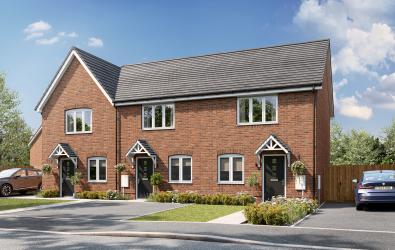
The Atkins, Terraced
Terraced House
Part of The Spires, Coventry, Coventry Prices from £26,000 for a 10% share Register your interest - Apply Now
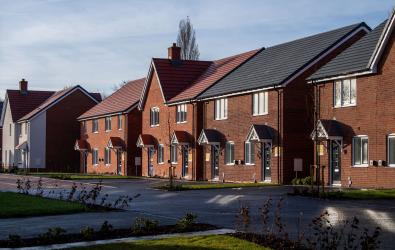
The Francis, Semi-Detached
Semi-Detached House
Part of The Spires, Coventry, Coventry Prices from £30,000 for a 10% share Register your interest - Last Plot Remaining
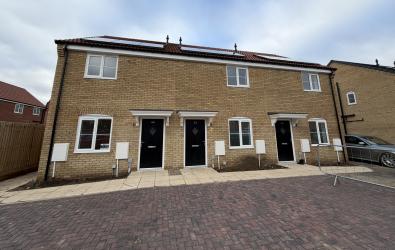
The Dee
End-Terraced House
Part of The Sycamores, London Road, Kirton Buy from £17,950 for a 10% share Register your interest - Available
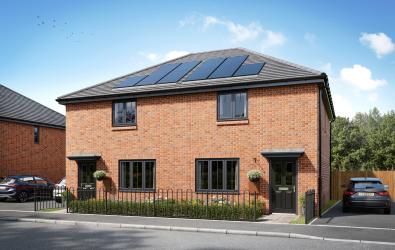
The Lockton, Lockview at Middlebeck
Semi-Detached House
Part of Lockview at Middlebeck, Newark, Newark on Trent, Nottinghamshire Prices from £29,500 for 10% share Register your interest - Available
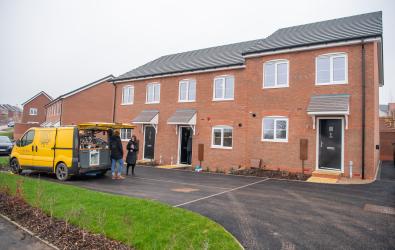
The Maple, Edwalton Fields
Mid-Terraced House
Part of Edwalton Fields, Nottinghamshire, Nottinghamshire Prices from £31,000 for a 10% share Register your interest - Available
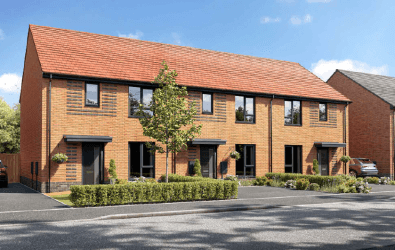
The Vickers (End-Terraced), Witham Gate
End-Terraced House
Part of Witham Gate, Witham St Hughs Prices from £28,750 for a 10% share Register your interest
How does Shared Ownership work?
Shared ownership is an affordable house scheme available through housing associations, local councils and private developers. Shared ownership properties are leasehold properties and typically you can buy:
- A new-build property
- An existing property that is within the shared ownership resale scheme
- A property that meets specific needs - such as a ground-floor property for a disabled user
So, how does shared ownership work? You can apply for a shared ownership mortgage to buy your share or pay using savings, it really depends on what works for you. If you need a deposit, you'll generally need between 5% and 10% of the share amount, not the full market value.
Based on a full property value of £250,000, this means a 5% deposit for a 25% share (£62,500) may be as little as £3,125. And a 5% deposit for a 10% share (£25,000), could be around £1,250. This makes shared ownership much more accessible compared with the costs you'd pay through traditional purchase methods.
You then pay mortgage payments based on your share and below-market value rent on the remainder. As you purchase larger shares of the property through staircasing, your rent goes down and your mortgage payments go up.
One benefit of shared property ownership is that you can usually defer any stamp duty until you own an 80% share of the property, which reduces your initial overall costs.
It’s important to remember that due to shared ownership properties being leasehold properties, you’ll likely have to pay ground rent and service charges, which go towards the maintenance of the property or communal areas.
-
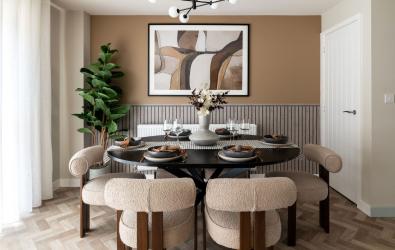
Shared Ownership: Pros and Cons
See if Shared Ownership is right for you and discover the pros and cons of Shared Ownership, including how it might benefit different people.
-
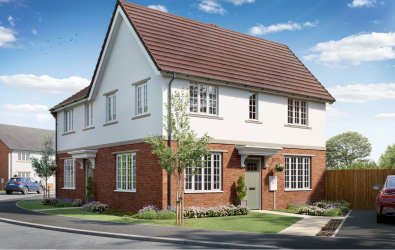
What is the New Shared Ownership Model?
Explore the brand new Shared Ownership Model, how it's changing from the traditional process and how it might impact your homebuying experience.
-
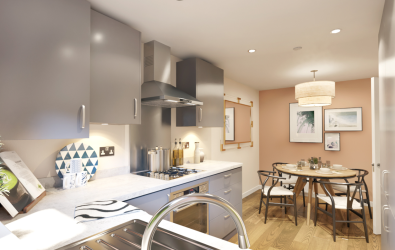
Can You Improve Shared Ownership Houses?
Learn more about improving your shared ownership house, including the process you'll need to take, how to prepare properly and what you can do.


Is Shared Ownership worth it?
Buying Shared Ownership properties is ideal if you can’t afford to buy through traditional methods. The entire process is based on eligibility but if your application is successful, it offers several unique benefits:
- You can buy a share of your home as small or as large as you feel comfortable with
- Your deposit is based on the share you buy, not the full amount
- You can defer on paying Stamp Duty Land Tax
The rent you pay on the remaining amount to the housing association or landlord is usually below market value, around 2.75% of the entire property value
Share to Buy offers much more flexibility and accessibility for buyers in several ways. Firstly, it reduces the amount you need for a deposit. Most shared ownership deposits are between 5% and 10% on the share, rather than the full market value. Secondly, you pay mortgage repayments based on your share and a below-market value rent, which is often cheaper than either private renting or buying outright.
Developers are also increasingly being encouraged to categorise a percentage of their development as Shared Ownership in return for planning permission. This is creating a larger amount of affordable housing in desirable areas and providing a broader range of choices for buyers.
It also provides a greater level of control over your repayments. If you find that you own a part-share of your home and you’re ready to take on more responsibility, the opportunity is there to increase the size of your share.
A Complete Guide to Shared Ownership
Download the latest Shared Ownership Guide and discover everything you need to know about the fastest growing home ownership scheme in the UK, including how Shared Ownership works, the benefits and who is eligible for the scheme.
Download Shared Ownership GuideWho is eligible for Shared Ownership?
Shared Ownership has restrictions around who can and cannot buy, which change depending on whether or not you're based in London, meaning it's important to research the scheme before you start the process.
The Shared Ownership scheme is available if both of the following apply to you:
- Your household income is below £80,000 a year. The threshold increases to £90,000 if you’re buying in London.
- You cannot afford the deposit and mortgage payments for your property of choice.
One of the following statements must also be true:
- You’re a first-time buyer
- You used to own a home but can’t afford to buy now
- You’re forming a new household - typically after a relationship breakdown
- You’re already part of the Shared Ownership scheme but want to move
- You own a home and want to move but can’t afford the new home that meets your needs
If you meet all of these requirements, Shared Ownership may be the ideal route for you to start your home ownership journey.
Often cheaper than renting
Often cheaper than renting

The option to buy more
The option to buy more
Sell your shares at any time
Sell your shares at any time
Shared Ownership FAQs
Below are the answers to several key questions we always hear about Shared Ownership, from selling a property to improving your home.
No, you can only buy properties that are specifically built under the Shared Ownership scheme by a housing association.
Fortunately, our developments are all built in areas specifically due to the strength of their nearby amenities and overall quality of life, meaning we often have opportunities to buy in highly desirable areas that would otherwise be inaccessible due to costs.
Yes, you can decorate or refurbish a shared ownership property, provided you're not making major structural changes the property itself.
Improvements such as painting a wall, installing a new kitchen or adding some wall tiles to your bathroom, for example, all fall under refurbishment and decoration.
Adding an extension to the property or installing new flooring is not something that would fall under refurbishment and would be considered a structural change, which would need to be cleared by the housing provider or other authority.
Always check your shared ownership lease as this will break down, in detail, what you can and can’t do within your shared ownership property.
You can read a more in-depth breakdown about improving your shared ownership home here.
Of course! While you initially only buy a ‘share’ of a property (typically between 10% and 75%), you’re able to buy additional shares all the way up to 100% ownership via a process known as staircasing.
As you increase the size of your share, your mortgage payments increase but your rent payments go down as you work up to outright (100%) ownership.
Whether you can have pets depends on the development you’re living in and the rules stated in your lease. If you’re buying a share of a house, this usually won’t be a problem.
If you’re living in a Shared Ownership apartment, there may be a rule that states you can’t have certain types of pets. If you’re unsure, always speak to your housing association!
Under the new Shared Ownership model, each property has a 10-year repair warranty which means the shared owner will receive support from the housing provider to pay for any necessary repairs.
If you buy under the Shared Ownership scheme, you’re considered an owner-occupier, which means you’re not able to sublet your home.
In most cases, Shared Ownership leases and even your mortgage conditions will prohibit you from subletting your property, unless you receive a written special exception from your housing association.
Initially, you can purchase between 10% and 75% of a Shared Ownership property, based on your individual funds and what the housing association allows, although it’s always worth speaking to a financial advisor before jumping into any purchase.
Once you’ve bought an initial share, you’re able to buy more shares in the property via a process known as staircasing.


